
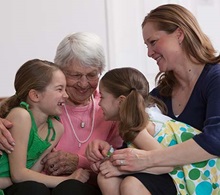
 Thanksgiving is a special holiday: a whole day focused on spending time with loved ones and being thankful, without much of the commercialism that has crept into many other holidays. But before you pull up to the table to enjoy your delicious Thanksgiving feast, consider the opportunities this day presents to teach children about the important values of Thanksgiving, such as thankfulness, gratitude, and family.
Here are a few tips to teach and model important Thanksgiving lessons during the holiday:
- Talk about why we celebrate Thanksgiving. Connect your celebration to the original story of the fall harvest celebration that brought together struggling, starving Pilgrims and generous Native Americans. Here at Premier Academy, we spend the week talking about the origins of Thanksgiving and what we are all thankful for!
- Turn the television off during family time. Yes, there are the parades, football games, and specials, but try to keep most of Thanksgiving about the conversation and time spent with loved ones.
- Talk about family traditions and tell stories. If your celebration involves multiple generations or multiple families, talk about traditions, “the good old days,” and your own childhood. Stories teach children about life and history.
- Put aside differences. Families can be wonderful and enjoyable, but tension and stress are often a part of family get-togethers. Vow to put aside differences on Thanksgiving and focus on the aspects of your family for which you are grateful. While easier said than done, this provides an excellent model for children as they learn about relationships and family.
- Talk about your Thanksgiving feast. Talk to children about where food comes from and how it was prepared. Everyone can share what their favorite food is and why.
- Be thankful. Focus on the things you are thankful for; ask everyone at the table to say what they are thankful for or make a list of what your family is thankful for. To take this gratitude lesson to the next level, you could perhaps even hang poster board on the wall and ask everyone to write things they are thankful for throughout the day. Here at Premier Academy we are thankful for all of our families and children who make providing you quality childcare, such a joy!
- Share & donate. Thanksgiving is a celebration of sharing and abundance. Develop a tradition of sharing with those who have less and involve children in contributing to a food shelter or other charities. This can help children to be thankful for what they have and learn the importance of helping others.
- Create something for Thanksgiving together. Whether you’re cooking with your children or creating a craft, involving kids in the preparation or an activity is a great way to celebrate and enjoy family time. Don’t worry if the potatoes have a lump or two; the memory-making experience is worth it.
- Have fun. Sometimes children spend long hours at the kid’s table while grown-ups talk and talk. Be sure fun family activities and enjoying one another is a top priority on Thanksgiving. Maybe you can start a new tradition like going outside and playing a family game of football, or even creating a Thanksgiving Trivia activity.
Here are a few fun facts to get you started:
>A ripe cranberry will bounce.
>All turkeys and chickens have wishbones.
>Canadians celebrate their own Thanksgiving every October.
>Abraham Lincoln declared a national day of Thanksgiving in 1863.
>The first Macy’s Thanksgiving Day Parade was held in 1924.
From our family at Premier Academy to yours, however you spend your day, we hope you have a safe, healthy and delicious Thanksgiving with family, friends, and neighbors.
 We here at Premier Academy know the importance of school readiness. The first five years are critical to a child’s lifelong development. Early experiences influence brain development, establishing the neural connections that provide the foundation for language, reasoning, problem solving, social skills, behavior, and emotional intelligence – characteristics that often determine how well a child will do in school and in life.
 Why do mornings seem so difficult? For parents, especially working parents that use child care in Omaha Nebraska, there is typically so much to do in a short period of time. We here at Premier Academy agree. “Morning is the time in which temperamental differences may be most evident – the child who is slow to get going clashes with the mother or father who is fast paced. Or the child who is crabby clashes with the parent who is also crabby,” say authors Ellen Galinsky and Judy David in their book
 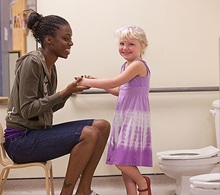 We face many challenges as parents, but toilet learning may feel like one of the more daunting ones. And now that your child seems old enough to begin toilet learning, you also wonder how toilet learning works in child care. Relax. Like every other aspect of child care, you and your child’s teacher will work as partners in the process of toilet learning. Toilet learning while in a child care or daycare setting may be easier than it is at home. At daycare, your toddler sees other children visiting the bathroom, which can create a powerful incentive and example. Teachers are usually very experienced in toilet learning and can offer you a lot of support. Many schools have toddler-sized toilets and sinks, which can make the process much less intimidating. Ask for the teacher’s insights, and try not to compare your child to other children in the center. Soon, your days of changing diapers will be over and your toddler will seem oh-so grown up.
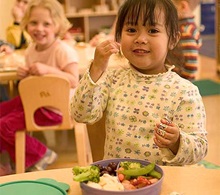 It’s never too early to teach your children healthy eating habits! Premier Academy is here to help. As we know, children often times shy away from the raw veggie tray and the fruit salad bowl, preferring a grab-and-go bag of chips or high-sugar cereal instead. But healthy eating isn’t all about broccoli and peas. It’s about habits and routines.
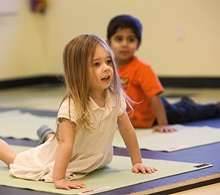 If we didn’t know it before, we know it now – being physically active and focusing on fitness is an important life priority beginning in early childhood to build healthy habits. At Premier Academy we provide quality childcare in Omaha and Elkhorn, Nebraska, and we believe that not only does regular exercise and physical activity increase physical and cardiovascular health, it can improve sleep, reduce stress, increase attention and learning, and minimize illness. Because the habits and preferences children develop early in life will shape their choices and behaviors for years to come, it is critical to establish good physical activity habits now.
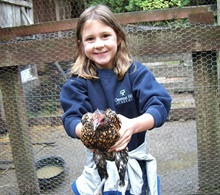 You’ve probably heard about the benefits of nature and outdoor play for children. According to the National Wildlife Federation, outdoor play boosts fitness and decreases the risk of childhood obesity; increases focus and academic achievement; and reduces stress and increases feelings of well-being.
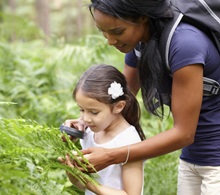 After a busy week of responsibilities, caring for children, and working in and out of the home, we cherish opportunities to be with family members. Shared quality time strengthens your family bond and helps everyone feel valued and respected. It is not necessary to make elaborate plans or partake in costly undertakings to enjoy family time.
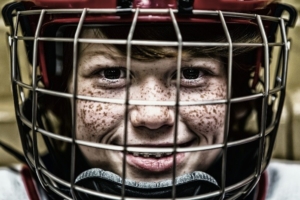 Brain injury is a common problem with young children, but a problem that can be avoided with a few preventative measures from parents. Brain injuries can be caused by trampoline accidents when children land on their head or neck, sports injuries are another common area that can result in brain injury and brain injuries among the skateboarding community are also very common.
 One of the most common struggles parents have is dealing with picky eaters. Does any of this sound familiar to you?